PROJECT GREEN CHALLENGE DAY 6
Challenge Doodle

Climate Justice

HOW DO WE MAKE CLIMATE SOLUTIONS EQUITABLE?

Climate change and environmental harm don’t affect everyone equally. Environmental racism has placed the heaviest climate burdens on communities of color, Indigenous peoples and marginalized groups. This unfairness, known as climate inequality, illustrates how those who contribute the least to the crisis often suffer the most. Low-emitting countries continue to face devastating storms, droughts, and rising seas, while wealthier, high-emitting countries are better able to protect themselves. By 2050, nearly 216 million people could be displaced as climate refugees, forced to leave their homes as disasters multiply and livelihoods disappear.

❝


It is a travesty of climate justice that those least responsible for the crisis are hardest hit: the poorest people; the most vulnerable countries; Indigenous peoples; women and girls.“
 

— António Guterres, United Nations Secretary-General
Read More ⌄

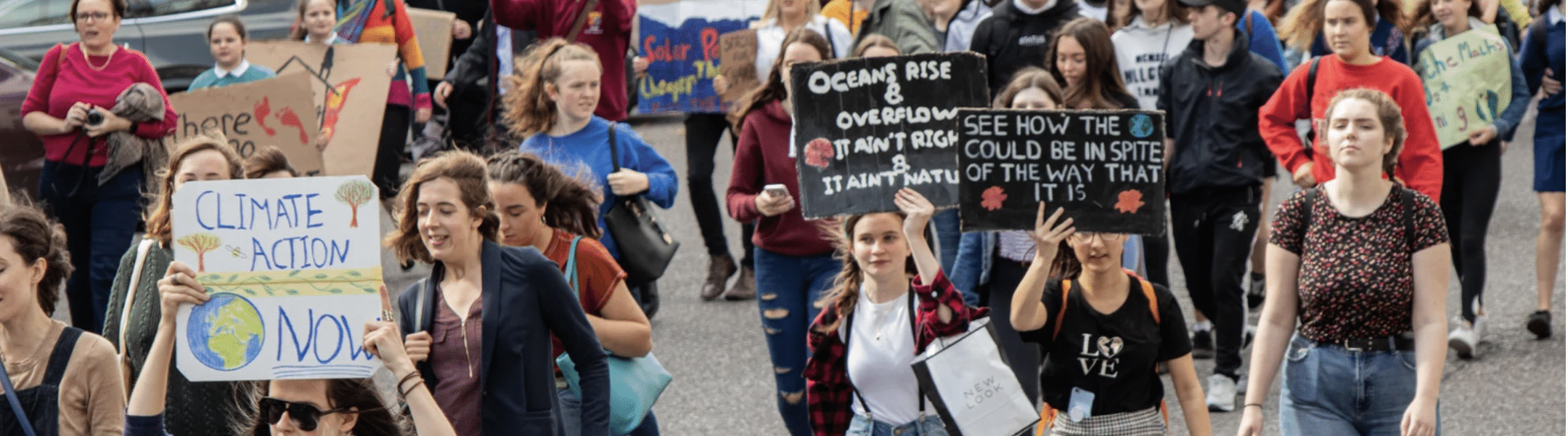
Young people around the world are leading the climate justice movement by organizing communities, demanding action, and taking governments to court. In the United States, youth plaintiffs in Held v. Montana won a groundbreaking 2024 case when the Montana Supreme Court affirmed their constitutional right to a clean, healthful environment. That same year, South Korea’s Constitutional Court sided with young activists, ruling that weak climate policies unfairly burden future generations and ordering the government to implement stronger emissions cuts. The Inter-American Court of Human Rights issued a landmark opinion in 2025 emphasizing the binding duty of states to prevent and mitigate climate harms. 

According to the court, “preventing harm to the climate system is a global legal obligation, incumbent upon all states,” highlighting that governments have a human rights responsibility to act urgently on climate change. Youth-led efforts were cited as a driving force behind these decisions. Together, these victories show how young people are reshaping laws, inspiring global action, and pushing for justice for both people and the planet.

This momentum is propelled by organizations advancing bold, systemic solutions for climate justice. Earth Guardians empowers young people to lead transformative action through art, music, storytelling, grassroots projects, civic engagement, and legal advocacy. The Captain Planet Foundation cultivates problem-solving for the planet through hands-on environmental education and funds youth-led initiatives that deliver measurable benefits for communities and ecosystems worldwide. 

At the international level, progress is also taking shape through new financial mechanisms. The Loss and Damage Fund—created to support communities least responsible for climate change yet most affected—has received about $789 million in pledges and counting. While this marks an important step forward, it underscores both the progress made and the scale of funding still needed to reach the world’s most vulnerable communities.

Achieving climate justice requires both personal commitment and systemic change. By enacting fair policies, uplifting grassroots leadership, and centering frontline communities, we can create a future where everyone everywhere has the chance to not only survive, but to thrive.

CHALLENGE

Green

20 POINTS

THINK

Environmental injustice exists all around us, often hidden in plain sight. Observing local issues and considering who is affected is the first step toward meaningful change.


CHALLENGE

  • Consider your community: what environmental challenges or injustices do you notice?
  • Pick one issue to explore further. Ask: What is happening? Who is affected? Is anyone addressing it? What solution might you propose?
  • Research your topic using tools like EJ Atlas or local resources.
  • Create a simple visual that will engage your peers highlighting the issue and your proposed solution.
  • Share your visual on Instagram with a caption of 3–5 sentences reflecting on what you learned, why it matters, and what action is needed.
  • Tag @TurningGreenOrg, @EarthGuardians, @CaptainPlanetFdn and #PGC2026 in the picture and the caption.

SUBMIT YOUR WORK

  1. Create a PDF: Combine your responses into a single PDF.
  2. Include: Your name (or team name), username, and school on the PDF.
  3. File Naming: firstname_lastname_day1_green_2026.pdf or teamname_day1_green_2026.pdf
  4. Example: kasie_jones_day1_green_2026.pdf or GreenTeam_day1_green_2026.pdf
  5. Avoid Symbols: (including #) or spaces in the file name.
  6. File Size: Must be under 5 MB.
  7. Submit: Upload your PDF. If you do not see the upload button, you need to login. A green confirmation message will appear if your submission is successful. If you don’t see this, please try again.
  8. Points: If your total points don’t update, your submission may not have uploaded correctly—please retry. 
  9. Check Score: Go to Edit Profile on the bottom navigation bar; your score appears at the top of the page.
  10. Questions: Email pgc@turninggreen.org.
  11. Social Media: Tag @TurningGreenOrg on Instagram and use #PGC2026.
The deadline for entering this challenge has passed.

Greener

40 POINTS

THINK

This is your moment to pause. You’re part of a global movement that links personal action to collective impact. By reflecting on your experiences, you help turn awareness into a force for justice and a more sustainable future.


CHALLENGE

  • Watch this short video on climate justice and activism.
  • Read this blog post on climate justice and the urgency of addressing unequal impacts of climate change.
  • Check out the Sustainable Development Goals infographic and notice which goals connect to your actions.
  • Record a short video (2 minutes maximum) speaking directly to camera and share your thoughts. Imagine you are delivering a short newscast on climate justice with your own headlines. You have two minutes to influence your audience.
    • How are you feeling at this moment in your PGC journey?
    • What’s inspiring or challenging you most?
    • What have you learned about each person’s role in creating change?
  • Share your video on social media and include a link to it in your pdf.
  • Tag @TurningGreenOrg, @EarthGuardians, @CaptainPlanetFdn, and #PGC2026 in the picture and the caption.
  • Bonus (up to 50 points): Reach out to a teacher or professor and ask if you can give a short presentation to the class on the importance of climate justice. After your presentation, email pgc@turninggreen.org with a brief summary of what you shared and a photo of you presenting in the classroom to receive 50 bonus points. Due October 16 at 6am Pacific Time.

SUBMIT YOUR WORK

    1. Create a PDF: Combine your responses into a single PDF.
    2. Include: Your name (or team name), username, and school on the PDF.
    3. File Naming: firstname_lastname_day1_greener_2026.pdf or teamname_day1_greener_2026.pdf
    4. Example: kasie_jones_day1_greener_2026.pdf or GreenTeam_day1_greener_2026.pdf
    5. Avoid Symbols: (including #) or spaces in the file name.
    6. File Size: Must be under 5 MB.
    7. Submit: Upload your PDF. If you do not see the upload button, you need to login. A green confirmation message will appear if your submission is successful. If you don’t see this, please try again.
    8. Points: If your total points don’t update, your submission may not have uploaded correctly—please retry. 
    9. Check Score: Go to Edit Profile on the bottom navigation bar; your score appears at the top of the page.
    10. Questions: Email pgc@turninggreen.org.
    11. Social Media: Tag @TurningGreenOrg on Instagram and use #PGC2026.
The deadline for entering this challenge has passed.

Greenest

60 POINTS

THINK

Extraordinary individuals use their voices, wisdom, and determination to spark movements and create lasting change ––often in the face of great challenges.


CHALLENGE

  • Watch the Goldman Prize winners and explore the Brower Youth Award recipients to learn about emerging environmental leaders.
  • Choose one changemaker who inspires you most and research them.
  • Write a short article with a headline, key story details (who/what/when/where/why/how), why they inspire you, and your personal takeaway.
  • Share your article – with your class, published in your school or local paper, or in another community space!
  • Also post it on social media and include a link to it in your pdf. Tag @TurningGreenOrg, @EarthGuardians, @CaptainPlanetFdn, and #PGC2026 in the picture and the caption.
  • Bonus (up to 50 points): Reach out to the changemaker! Write a letter explaining why you admire them and ask three thoughtful questions. Earn 50 bonus points if you receive a reply that answers your questions. Email your letter and the reply you receive to pgc@turninggreen.org by October 16, 2026.

SUBMIT YOUR WORK

    1. Create a PDF: Combine your responses into a single PDF including any links.
    2. Include: Your name (or team name), username, and school on the PDF.
    3. File Naming: firstname_lastname_day1_greenest_2026.pdf or teamname_day1_greenest_2026.pdf
    4. Example: kasie_jones_day1_greenest_2026.pdf or GreenTeam_day1_greenest_2026.pdf
    5. Avoid Symbols: (including #) or spaces in the file name.
    6. File Size: Must be under 5 MB.
    7. Submit: Upload your PDF. If you do not see the upload button, you need to login. A green confirmation message will appear if your submission is successful. If you don’t see this, please try again.
    8. Points: If your total points don’t update, your submission may not have uploaded correctly—please retry. 
    9. Check Score: Go to Edit Profile on the bottom navigation bar; your score appears at the top of the page.
    10. Questions: Email pgc@turninggreen.org.
    11. Social Media: Tag @TurningGreenOrg on Instagram and use #PGC2026.
The deadline for entering this challenge has passed.